
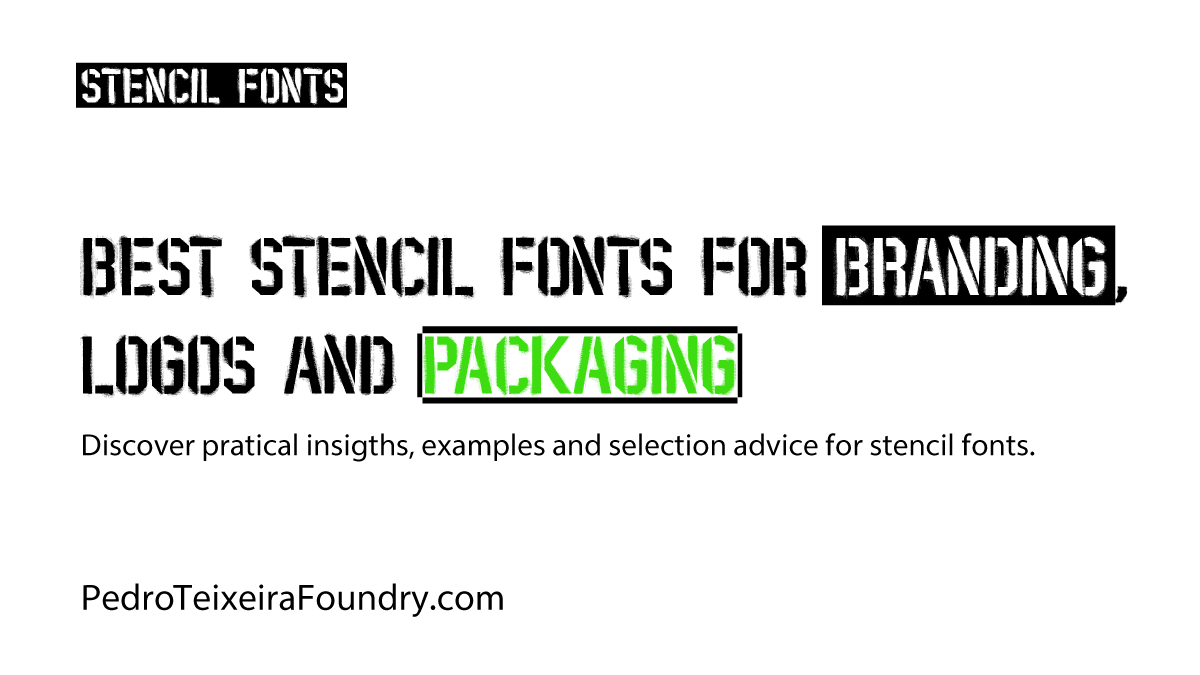

stencil fonts can be a strong design choice when the goal is clarity, personality and practical usability. This draft gives you a stronger starting point that can be expanded before publication.
What are stencil fonts?
stencil fonts usually describes a category of type styles used when a project needs a specific visual tone, clearer brand distinction, or stronger display impact. The best option depends on where the font will live: logo, packaging, editorial layouts, posters, web headers, or a broader identity system.
Why designers use stencil fonts
Designers use this kind of style when they want to create a recognisable voice quickly. In branding, the right font can signal confidence, craft, energy, heritage, luxury, or experimentation. In packaging and editorial use, the goal is often to balance personality with readability and production reliability.
Quick comparison
| Option | Best for | Strength | Watch out for |
|---|---|---|---|
| stencil fonts option 1 | Branding | Strong personality | Can feel too loud in long text |
| stencil fonts option 2 | Packaging | Bold impact | Needs careful spacing |
| stencil fonts option 3 | Logos | Distinctive silhouette | Check licensing and readability |
How to choose the right option
Look at readability, spacing, licensing, language support, stylistic alternates, and how well the font pairs with simpler support typography. A font that looks exciting in isolation can become harder to use across a full design system if it is too narrow in tone or too limited technically.
Licensing considerations for stencil fonts
Before choosing stencil fonts for a real project, check whether the font license covers logo design, client work, webfont use, app use, packaging, and large-scale commercial distribution. Licenses vary a lot between foundries and marketplaces, so the safest approach is to confirm the exact terms before launch.
- Check desktop and commercial use rights.
- Confirm whether webfont files are included.
- Review marketplace restrictions for resale, templates, or print-on-demand.
- Make sure multilingual character support matches the project.
How to pair stencil fonts
A strong pairing usually mixes personality with clarity. If your main display choice is expressive, balance it with a simpler supporting sans serif or a clean serif for body copy, captions, or secondary headlines.
- Use a clean sans serif when the main font is dramatic.
- Use a refined serif when you need a more premium editorial feel.
- Keep contrast in weight and style, but not so much that the page feels disconnected.
Mistakes to avoid
- Choosing style over readability.
- Ignoring licensing terms.
- Using the wrong tone for the brand or project.
- Forgetting how the font behaves at small sizes or in multilingual settings.
FAQ
What are stencil fonts best for? They work best when you need a clear visual personality, especially in logos, packaging, short headlines, marketing assets, and identity systems where distinctiveness matters.
Ready to explore more?
If you are researching stencil fonts for a real project, the best next step is to compare live options, licensing, and visual tone side by side.
More practical advice on stencil fonts
When evaluating stencil fonts, look beyond style alone. Consider readability at different sizes, how the forms behave in logos, packaging, editorial layouts and digital contexts, how much contrast the letterforms create, and whether the typeface still feels convincing outside a moodboard. Strong choices usually perform well in real design systems, not just in isolated previews.
It also helps to compare how the font behaves next to competitors in the same category. A choice that looks exciting in a screenshot can become harder to use in production if spacing is uneven, if character support is limited, or if licensing becomes expensive once the project scales. That is why practical testing, pairing, and usage context matter so much.
More practical advice on stencil fonts
When evaluating stencil fonts, look beyond style alone. Consider readability at different sizes, how the forms behave in logos, packaging, editorial layouts and digital contexts, how much contrast the letterforms create, and whether the typeface still feels convincing outside a moodboard. Strong choices usually perform well in real design systems, not just in isolated previews.
It also helps to compare how the font behaves next to competitors in the same category. A choice that looks exciting in a screenshot can become harder to use in production if spacing is uneven, if character support is limited, or if licensing becomes expensive once the project scales. That is why practical testing, pairing, and usage context matter so much.
More practical advice on stencil fonts
When evaluating stencil fonts, look beyond style alone. Consider readability at different sizes, how the forms behave in logos, packaging, editorial layouts and digital contexts, how much contrast the letterforms create, and whether the typeface still feels convincing outside a moodboard. Strong choices usually perform well in real design systems, not just in isolated previews.
It also helps to compare how the font behaves next to competitors in the same category. A choice that looks exciting in a screenshot can become harder to use in production if spacing is uneven, if character support is limited, or if licensing becomes expensive once the project scales. That is why practical testing, pairing, and usage context matter so much.
More practical advice on stencil fonts
When evaluating stencil fonts, look beyond style alone. Consider readability at different sizes, how the forms behave in logos, packaging, editorial layouts and digital contexts, how much contrast the letterforms create, and whether the typeface still feels convincing outside a moodboard. Strong choices usually perform well in real design systems, not just in isolated previews.
It also helps to compare how the font behaves next to competitors in the same category. A choice that looks exciting in a screenshot can become harder to use in production if spacing is uneven, if character support is limited, or if licensing becomes expensive once the project scales. That is why practical testing, pairing, and usage context matter so much.
More practical advice on stencil fonts
When evaluating stencil fonts, look beyond style alone. Consider readability at different sizes, how the forms behave in logos, packaging, editorial layouts and digital contexts, how much contrast the letterforms create, and whether the typeface still feels convincing outside a moodboard. Strong choices usually perform well in real design systems, not just in isolated previews.
It also helps to compare how the font behaves next to competitors in the same category. A choice that looks exciting in a screenshot can become harder to use in production if spacing is uneven, if character support is limited, or if licensing becomes expensive once the project scales. That is why practical testing, pairing, and usage context matter so much.
More practical advice on stencil fonts
When evaluating stencil fonts, look beyond style alone. Consider readability at different sizes, how the forms behave in logos, packaging, editorial layouts and digital contexts, how much contrast the letterforms create, and whether the typeface still feels convincing outside a moodboard. Strong choices usually perform well in real design systems, not just in isolated previews.
It also helps to compare how the font behaves next to competitors in the same category. A choice that looks exciting in a screenshot can become harder to use in production if spacing is uneven, if character support is limited, or if licensing becomes expensive once the project scales. That is why practical testing, pairing, and usage context matter so much.
More practical advice on stencil fonts
When evaluating stencil fonts, look beyond style alone. Consider readability at different sizes, how the forms behave in logos, packaging, editorial layouts and digital contexts, how much contrast the letterforms create, and whether the typeface still feels convincing outside a moodboard. Strong choices usually perform well in real design systems, not just in isolated previews.
It also helps to compare how the font behaves next to competitors in the same category. A choice that looks exciting in a screenshot can become harder to use in production if spacing is uneven, if character support is limited, or if licensing becomes expensive once the project scales. That is why practical testing, pairing, and usage context matter so much.